
How to read a skincare ingredient list beyond the label
To read a skincare label usefully, check the product’s purpose, full ingredient list, directions and warnings together. Words such as natural or botanical describe only part of the story. They do not guarantee that a formula will suit your skin.
Shopping for skincare can feel like learning a new language. One label talks about oils, another highlights a vitamin and a third focuses on what a product leaves out. You do not need to memorise every ingredient name to make a more considered choice. Start with a few practical questions.
1. What is this product designed for?
Before comparing ingredients, establish the job. Is it a rinse-off face cleanser, a body butter or an oil intended for a particular area? The directions should make its use clear.
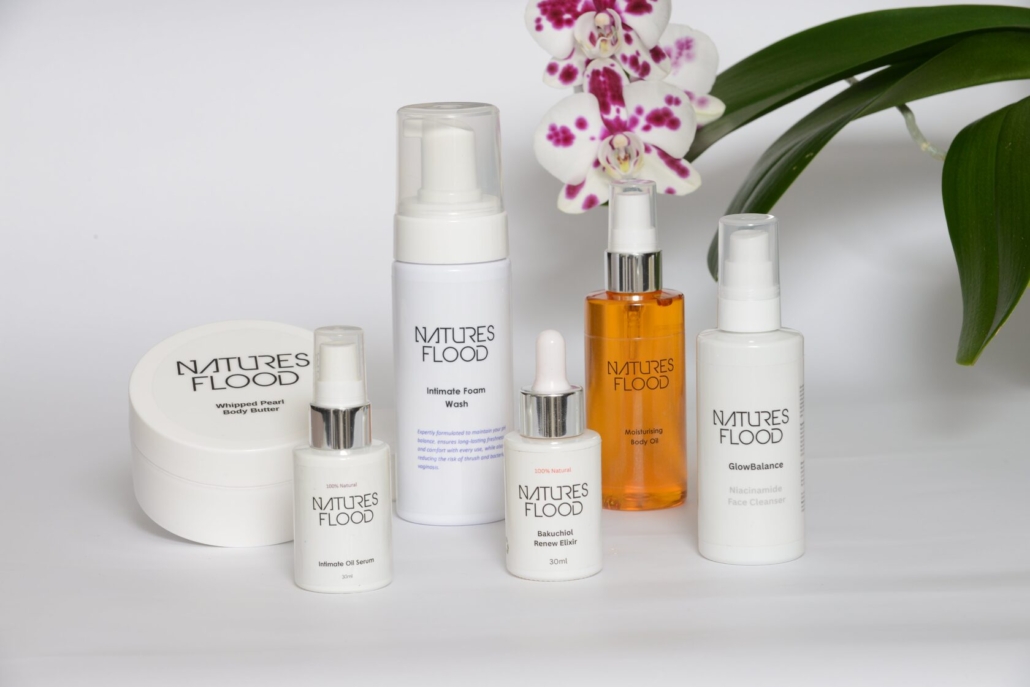
For example, GlowBalance is a face cleanser, while Moisturising Body Oil belongs in a body care routine. A similar-looking bottle does not make two products interchangeable. External intimate care has its own directions and should not be assumed suitable for internal use.
2. Have I read the complete ingredient list?
The headline on the front of a pack is usually a short introduction. Turn to the full list when you need to check a particular ingredient. Skincare labels often use standard ingredient names alongside familiar descriptions, so a botanical name may be followed by a name you recognise.
On the Natures Flood ingredients page, for example, sunflower appears alongside Helianthus annuus. If you are avoiding a known ingredient, check its precise name rather than relying on the product photograph or a brief marketing description.
Our ingredient guide brings together information available for the collection. Always compare it with the current packaging, particularly if you have an older product or an ingredient concern.
3. Am I making an assumption about “natural”?
Natural origin does not tell you everything about how a finished product will feel or whether you will react to it. A botanical oil, butter or fragranced ingredient may be enjoyable for one person and unsuitable for another.
The American Academy of Dermatology advises people with fragrance sensitivity to look for fragrance-free products and notes that botanical ingredients can still contain fragrance-related components. If fragrance is a concern, check the actual list rather than assuming a plant-based description means fragrance-free.
4. Does the claim answer my question?
Be specific about what you want to know. “Contains shea butter” answers an ingredient question. It does not establish how every person’s skin will respond. “Soap-free” describes a formulation choice, but it does not remove the need to read the rest of the label.
It is also worth separating a preference from a requirement. You might prefer a particular texture or botanical ingredient. A known allergy or a healthcare professional’s advice needs a more precise check than a general preference.
5. How will I introduce it?
Keep the rest of your routine familiar when adding something new. Dermatologists recommend testing a skincare product on a small area before wider use, following suitable directions for the product. The AAD’s linked guide explains a repeated test over seven to ten days. Home testing cannot guarantee that a reaction will never happen and is different from medical allergy patch testing.
Frequently asked questions
Does a long ingredient name mean it is harsh?
No. Name length is not a useful test of whether a product will suit you. Focus on the ingredient’s identity, the finished formula and any known sensitivities.
Is an unscented product always fragrance-free?
No. Check the ingredient list and ask the brand if you need clarity rather than treating the two descriptions as identical.
What if I cannot find the information I need?
Contact Natures Flood with the product name and your question. Avoid guessing when you are checking something important to your own skin.
Further reading: American Academy of Dermatology: testing skincare products. This guide explains label reading and does not diagnose allergies.
